


🌱 December – Dream & Design
👋 Intro: What’s Going On With Your Lawn?
Your lawn might be asleep, but your landscaping dreams don’t have to be. December is the perfect month to start planning upgrades—without the pressure of fast turnarounds. Grab a cocoa and let’s map out your dream yard.
🗓️ The Season at a Glance
This Season’s Challenges:
Frozen ground = no outdoor work
Cabin fever = daydreams of patios and pergolas
Missed early bids = late spring builds
GR8 Tip: Winter design consultations help you skip the spring rush and start sooner.
🛠️ Tools, Treatments & Services to Know
Our Seasonal Services:
Custom Landscape Design: We draft it, you dream it
Backyard Vision Boards: Materials, layout, colors
Early Spring Booking: Lock in your spot before the rush
Helpful Products:
Design software previews
Material samples delivered to your door
✅ Your Seasonal Lawncare Checklist
Walk the yard and take notes
Pin inspiration for features and materials
Book a design consultation
Budget and prioritize next year’s projects
📞 GR8 Call to Action:
Don’t wait for spring—let’s start designing your dream yard today.
🗓 Book online: www.Gr8Landscaping.com
📞 Call/text us at 801-712-0238
🌱 November – Ready for Winter
👋 Intro: What’s Going On With Your Lawn?
It’s getting chilly—and your lawn knows it. Prepping now protects your sprinkler system, yard, and hardscaping from winter damage. A little effort in November saves a lot of headache come spring.
🗓️ The Season at a Glance
This Season’s Challenges:
Freezing sprinkler lines = $$$ repairs
Snow mold risk from long, wet grass
Broken hoses, exposed spigots
Delayed blowouts = booked-out landscapers
GR8 Tip: Mark your water shutoff valve before the snow buries it.
🛠️ Tools, Treatments & Services to Know
Our Seasonal Services:
Sprinkler Blowouts: Full system shut-down
Lawn Final Cut: Short mow to prevent snow mold
Winter Prep Visits: Wrap pipes, store hoses, cover beds
Helpful Products:
Hose bib covers
Plant blankets for sensitive perennials
✅ Your Seasonal Lawncare Checklist
Blow out sprinkler system
Cut lawn to 2–2.5 inches before snow
Wrap exposed plumbing
Rake last leaf piles
📞 GR8 Call to Action:
Winter is coming. Book your blowout before the freeze!
🗓 Book online: www.Gr8Landscaping.com
📞 Call/text us at 801-712-0238

🌱 October – Hardscape & Harvest
👋 Intro: What’s Going On With Your Lawn?
Fall evenings in Utah are made for cozy gatherings. If you’ve been dreaming of a fire pit, pathway, or patio, October is the perfect time to get it installed before the ground freezes.
🗓️ The Season at a Glance
This Season’s Challenges:
Less daylight = rushed outdoor use
Cooler nights = perfect fire pit weather
Uneven paths = safety hazards as leaves pile up
Patio envy = too real
GR8 Tip: Hardscape in fall, so it’s ready to use when spring hits without construction delays.
🛠️ Tools, Treatments & Services to Know
Our Seasonal Services:
Custom Pathways: Safer, sleeker backyard flow
Patio Installation: Stone, paver, or concrete designs
Fire Feature Builds: From classic pits to luxe fireplaces
Helpful Products:
Pre-built fire pit kits
Permeable pavers for better water flow
✅ Your Seasonal Lawncare Checklist
Mark and clear areas for hardscaping
Approve designs before ground freezes
Add lighting along new walkways
Clean and store outdoor furniture if not in use
Dream patio? Fire feature? Let’s build it before winter sets in.
🗓 Book online: www.Gr8Landscaping.com
📞 Call/text us at 801-712-0238

🌱 September – Fall in Love with Your Yard
👋 What’s Going On With Your Lawn?
The cooler temps in September are a sigh of relief for your grass—and your water bill. But don’t get too comfy. Fall is prime time for giving your lawn the nutrients and cleanup it needs to shine next spring.
🗓️ The Season at a Glance
This Season’s Challenges:
Leaves smothering grass and harboring pests
Missed fertilizer windows reducing spring growth
Thatch buildup choking out new roots
Dormant weeds prepping a sneak attack
Helpful Products:
Fall blend fertilizer with high potassium
Mulching mower blade add-ons
“Don’t bag it all! Mulched leaves can feed your soil if done right.”
✅ Your Seasonal Lawncare Checklist
Clear leaves weekly to avoid suffocation
Apply fall fertilizer before first frost
Overseed for thicker turf next spring
Cut grass slightly shorter for the season
🛠️ Tools, Treatments & Services to Know
Our Seasonal Services:
Leaf Clean-Up: Save your back—and your weekend
Fall Fertilization: Root-boosting, winter-ready formulas
Overseeding: Fill in patchy areas before snow hits
Your lawn’s fall glow-up starts now. Let us handle the hard stuff.
🗓 Book online: www.Gr8Landscaping.com
📞 Call/text us at 801-712-0238

🌱 August – Late Summer Landscaping
🗓️ The Season at a Glance
This Season’s Challenges:
Heat stress from hot afternoons and warm nights
Watering woes from outdated schedules or uneven zones
Compacted soil from foot traffic and summer activities
Weed growth in dry, weak areas
👋 Intro: What’s Going On With Your Lawn?
August in Salt Lake County means relentless sun, minimal rainfall, and lawns that are feeling the burn—literally. If your yard is crispy, patchy, or just looking tired, now’s the time to prep for a smoother shift into fall. Because your grass is about to get a second wind—if you treat it right.
“Aerating in late summer helps relieve soil stress and gives nutrients a first-class ticket to your roots.”
🛠️ Tools, Treatments & Services to Know
Our Seasonal Services:
Core Aeration: Relieves compaction and preps soil for seeding
Sprinkler Tuning: Fix hotspots and maximize efficiency
Soil Amendment: Organic boosts to restore nutrient levels
Helpful Products:
Moisture manager treatments: Improve water absorption
Organic fertilizer: Gentle feeding before fall seeding
✅ Your Seasonal Lawncare Checklist
Aerate compacted areas
Adjust sprinkler times as daylight shortens
Spot-treat for weeds before they spread
Prep fall flowers or ground cover beds
Get ahead of fall! Schedule aeration and sprinkler services today.
🗓 Book online: www.Gr8Landscaping.com
📞 Call/text us at 801-712-0238

Heat-Resistant Plants & Summer Lawn Care
Utah’s summer heat can be brutal on your lawn and garden. The combination of high temperatures, dry conditions, and intense sunlight can stress plants and turf if they’re not properly cared for. But don’t worry—you can keep your yard looking fresh and green all season long with heat-resistant plants and smart summer lawn care techniques. Here’s how to beat the heat and keep your landscape thriving!
1. Choose Heat-Resistant Plants
Planting the right greenery is half the battle. Opt for drought-tolerant, heat-loving plants that can handle Utah’s summer climate. Some great choices include:
Perennials: Russian Sage, Yarrow, Coneflowers, Black-eyed Susans
Shrubs: Lavender, Sagebrush, Barberry
Ornamental Grasses: Blue Fescue, Fountain Grass
Ground Covers: Ice Plant, Creeping Thyme
These plants require less water and maintenance while still adding color and texture to your landscape.
2. Water Deeply & Efficiently
Shallow watering causes weak roots that dry out quickly. Instead, water deeply (about 1–1.5 inches per week) to encourage deep root growth. Water early in the morning or late in the evening to prevent evaporation.
3. Adjust Your Mowing Habits
Cutting your lawn too short makes it more vulnerable to heat stress. Set your mower to a higher setting (around 3 inches) to provide shade for the roots and reduce moisture loss. Also, keep your mower blades sharp to prevent tearing the grass.
4. Use Mulch to Protect Soil Moisture
A 2–3 inch layer of mulch around plants and trees helps retain soil moisture, reduce heat stress, and prevent weeds from taking over. Organic mulch like wood chips or bark is an excellent choice.
5. Reduce Lawn Size with Hardscaping & Xeriscaping
If your lawn struggles in the summer, consider replacing some grassy areas with drought-friendly landscaping. Hardscaping elements like paver paths, decorative rock gardens, and raised beds can add beauty while reducing water use.
6. Provide Shade & Wind Protection
Installing pergolas, shade sails, or even planting trees strategically can help keep your yard cooler and more enjoyable during peak summer heat.
7. Check for Lawn & Plant Stress Signs
Watch for brown spots, wilting, or curling leaves—these could be signs of dehydration or heat stress. If you notice these symptoms, adjust your watering schedule or add shade protection as needed.
Conclusion
Beating the summer heat doesn’t have to mean sacrificing a beautiful landscape. By choosing heat-resistant plants, watering wisely, and adjusting your lawn care routine, you can keep your yard thriving all season long. Need help with summer lawn care, xeriscaping, or irrigation solutions?
Call GR8 Landscaping at [801-712-0238]

🌱 When the Heat Is On: Keep Your Lawn Cool and Thriving
👋 What’s Going On With Your Lawn?
Summer in Salt Lake County can turn up the heat—and fast. With temps regularly pushing past 90°F and humidity nowhere in sight, your lawn can go from lush to crispy in a matter of days. If you’re seeing brown patches, wilting blades, or your turf feels more like toast than turf, you’re not alone. The good news? A few smart tweaks can keep your grass green and your weekends worry-free.
👋 What’s Going On With Your Lawn?
Summer in Salt Lake County can turn up the heat—and fast. With temps regularly pushing past 90°F and humidity nowhere in sight, your lawn can go from lush to crispy in a matter of days. If you’re seeing brown patches, wilting blades, or your turf feels more like toast than turf, you’re not alone. The good news? A few smart tweaks can keep your grass green and your weekends worry-free.
🗓️ The Season at a Glance
High heat and low rainfall are the norm around here from late June through August. That means your lawn needs help handling water loss, soil stress, and summer pests.
This Season’s Challenges:
Heat stress turning grass brown or brittle
Over- or under-watering from outdated sprinkler settings
Lawn fungus and mold from night watering
Weeds thriving in dry, patchy areas
Grub damage from egg-laying beetles
GR8 Tip:
Water early in the morning—before 8 a.m.—so your lawn drinks up before the sun cooks it off. Think of it as brunch for your backyard.
🛠️ Tools, Treatments & Services to Know
We’re all about working smarter, not harder. These are your summer lawn MVPs:
Our Seasonal Services:
Sprinkler System Tune-Up: We adjust spray patterns and check for leaks to ensure every drop counts.
GR8 Grub Treatment: Keeps those pesky larvae from snacking on your roots (before you even see the damage).
Summer Soil Boost: A mid-season fertilizer designed for heat resilience and root strength.
Helpful Products:
Moisture-Retaining Soil Additives: Help sandy or clay-heavy Utah soil hold water longer.
Smart Sprinkler Controllers: Adjust watering based on weather—available from GR8 and easy to install.
✅ Your Seasonal Lawncare Checklist
🔲 Check and update sprinkler schedule for early morning watering
🔲 Watch for signs of heat stress: curled blades, dull color, dry topsoil
🔲 Book a Grub Treatment before larvae start hatching
🔲 Avoid mowing too short—aim for 3” height to shade roots
🔲 Apply slow-release summer fertilizer
📞Call/text us at 801-712-0238
Don’t wait for the damage to show up—take charge before your grass gets fried. Our summer services keep your lawn tough, hydrated, and happy.
Seeding Success
How to grow lawn seed

Watering is crucial. We recommend watering 4 times daily for 7 min each time until you see new growth (about 2-3 weeks) then you reduce it to 2 times a daily for 7 min each time or your regular watering schedule depending on the weather.
Timing is important, we recommend spring or fall. The ideal temperature is just slightly warmer than jacket weather. If you missed the window though for any reason the seed will still be there and ready for the next time the temperatures are right.
Stay off bare spots in the process of recovery for at least 6-9 weeks. The roots will be fragile and traffic in new growth areas can undo all your hard work.
Mowing should not be performed for at least 6 weeks to let the roots establish. You want to wait until it is looking in desperate need of a cut, and when you do mow be gentle.
Lastly, enjoy your lush full lawn! We are always here if you have any questions.
6 Most Overlooked Spring Lawn Tips

Watering
A good spring watering plan is key to getting roots to grow deep. This is important to help protect from disease, pests, and Heat Stress during the summer months. Encouraging roots to grow deep can also help you save water and money in the summer months without struggling to keep the lawn healthy.

For deep roots you’ll want to water deeply and less frequently. The goal is to force the roots to grow deep to access water. You should not be watering every day in the spring. If you find yourself watering everyday in the summer it is usually because of shallow roots or you may have the wrong grass for the area.
You will want to check coverage and measure how much water your sprinklers are putting on the lawn.

After testing your sprinklers you can now set your timer. Below is a general guide to watering in the spring, many factors can very the amount of water needed. The goal is to dry out the top 1”-4” between watering cycles, check the lawn to see if you are getting the top few inches to dry out. If the top 1”-4” of soil are consistently wet you may need to spread out the watering days and water less per week.

2. Aeration

Aerating the lawn is a mechanical way to loosen soil. Aerating helps water penetrate deep into the soil and avoid evaporation. Aerating helps air get into the soil and harmful gases escape. Loosening the soil can also help roots to travel deeper and be more robust. This can also create a great space for grass seeds to germinate. Over seeding is typically done after an aeration to help the success of germination.
3.Control Weeds

Spring is a great time to apply Pre-Emergent herbicides. Pre-Emergents help stop new seeds from germinating in the lawn. It is much easier to prevent weeds from going than to try to control them later in the hotter months when they don’t absorb herbicides as well. Don’t put down Pre-Emergent if you plan to seed the lawn. Pre-Emergents can stop the germination not only of undesired plants but, desired plants as well. Be careful around gardening and ornamental areas. Read the label of the product you decide to use for best result. It may require you wear personal protective equipment during application.
If you hire a company to treat the lawn and are planning on seeding yourself you should inform them not to apply any Pre-Emergent herbicides.
4. Fertilizing

Spring fertilizing is an important step to get the lawn off to a great start. Milorganite is the GR8 fertilizer of choice. Using natural fertilizers can help avoid shallow roots and extreme growth that requires extreme mowing. It is all about investing in the soil, that is our philosophy. If possible it is best to fertilize after an aeration but, its fine to do it before.
Speaking of investing in soil we recommend amending the soil in the spring as well with granulated or liquid humates. This can help the soil structure to achieve similar results of an aeration without the risk of breaking sprinkler heads.
5. Snow Mold

If you have snow piles on the lawn we recommend breaking them up and putting the snow in a sunnier area to help it melt quickly. Leaving snow piles on the lawn can increase the chances of this unsightly fungus. Snow mold typically doesn’t cause permanent damage but, can be unsightly for weeks into the season. It only takes a little elbow grease to break up the snow and it can help the lawn to get off to a good start.
6. Seeding

Spring is a great time to seed! The weather is ideal during this season and it can be a good time to help thicken those thin areas in the lawn.
We recommend that you do a little research on what seed to buy if you decide to seed. There are some seeds that can grow easily but, look and feel awful. We recommend finding a local nursery or garden center to buy seed from. The EZ seed bags from big box stores are usually not ideal. Growing the wrong grass seed can create a pest that could take over a your lawn. It’s important to get the right seed form the job, so find an experienced professional who knows what seed will work best for you lawn.
I hope these tips have helped you feel more confident about the spring lawn season. The most important thing is to get those roots nice and deep for a successful lawn all year long!
If you know someone who could benefit from this information share this post and get good karma by, clicking an Icon below!
If you live in Salt Lake City, UT we would love to become your lawn’s best friend.
Top 5 reasons your lawn is dry and the solutions
When the temperature rises and water is being restricted in Salt Lake City it is not uncommon to see a lot of dry lawns out there.

Here are a few common factors in the Salt Lake City area that can affect your lawns ability to absorb moisture.
- Cause: It is not uncommon to have a shade grass (typically a Fine Fescue) in an area that is in direct sunlight. If the blades are thin and tube like, it is most likely some variety of shade grass. This happens, because shade grass out competes the other grasses in the early spring and in the fall if your lawn is not regularly fertilized and is thin.
Solution: Split your watering cycle to water more frequently for less time and overseed with a more sun tolerant grass type in the spring and fall after an aeration or power raking.

- Cause: Soil type can cause the water to either pass through too quickly or not at all. It is easy to identify your soil type, here is a video.
Solution: Use the soil amendment humate to improve soil structure. Also an aeration will help to mechanically give soil better structure.If your soil is high in clay use gypsum to improve the structure and help penetration. If the soil is sandy split up water cycles to water more frequently for less time.

- Cause: Bad watering habits. You should never be watering every day, this can cause your roots to be shallow. It will look great in the spring, but once the temperature rises your lawn will struggle with such a shallow root system. This not only makes for a unhealthy drought stressed lawn, it will also be expensive to maintain. You can find yourself constantly turning up the watering to keep the lawn green. Also shallow roots invite pests and disease.
Solution: Learn from your mistakes and change your watering practices next spring. Deep soaks less frequently are ideal to help develop a deep and robust root system for your lawn.

- Cause: Your lawn might not be dry, but may have grubs. Grubs are most common in the heat of summer. Grub damage looks very similar to a dry lawn, but if left untreated it can spread quickly and be unrecoverable. If you are putting down more and more water and it isn't helping, you most likely have grubs. Investigate the area even if you think it's just dry. Give the lawn a good tug, if it peels up like carpet then you have grubs. The sooner you identify grubs the better! You can save yourself a lot of work by catching them early.
Solution: You can call us or you can treat them yourself. There are many over the counter products for grubs, but it is always a good option to hire a professional.

- Cause: Just not watering enough, not at the right time, or your sprinklers need to be adjusted.
Solution: Watering should always be done in the early morning hours and your sprinklers should be overlapping for nice even coverage. For weekly watering amounts there are usually many local resources available. Typically 1-2 inches a week is standard.

I hope this has given you some insight into how to best care for your lawn. If you need a landscaping professional to help you achieve a great lawn or help with other projects just get a quick and easy estimate from us. We truly care about our customers having the best lawns and a superlative customer experience! Get an online Estimate!
Top 3 reasons your lawn is mostly weeds!

NUMBER ONE, Your Lawn Is Struggling!
When your lawn is struggling to survive, weeds thrive. The best way to stop weeds is to have a robust and healthy lawn. There could be many reasons why a lawn is not competing well against undesired weeds in Salt Lake City, here are just a few...
- Compaction: Soil compaction can be great for certain weeds but will block a lawns access to water, air, and nutrients.
- Soil structure: Different soil types favor different plants. If your soil is wrong for the lawn you are trying to grow, then you will most likely be growing weeds that do well in the soil you do have.
- Wrong Grass Types: You could have the wrong grass in the wrong area. All to often I will see a shade grass in direct sunlight. This is fine in the spring but weeds will take over in the hot summer while the lawn struggles a bit more. Also you could just have a bad type of grass for your area.

- Lack of water: Weeds don't need water to grow! Your lawn does need water on the other hand. Make sure your giving your lawn the water it needs to thrive and out compete weeds.
- Too much water: Too much water and you can get those nasty swamp weeds. If you have standing water for most the day then you need to change the way you water or install some kind of drainage system.
- Lack of fertilizer: Fertilizing the lawn regularly isn't just to keep your grass healthy. It also helps your lawn become thick so there is nowhere for weeds to grow. Get an instant online estimate for applications in Salt Lake City
- Wrong fertilizer: Different plants need different nutrients. If you are putting down the wrong nutrients, then you could be creating a perfect condition for weeds in your area. This is why we recommend using a local professional to help you select fertilizer or have them apply it for you.
- Mowing too short: If you mow grass too short you could be asking for weeds. Cutting a lawn short stunts lawn growth and gives weeds a chance to take over. You can do this if you want, it will just be a bit harder to keep the lawn weed free.

NUMBER TWO, Your not using the right herbicides!
Using the right herbicide is important. Herbicides control different weeds, it is important to read the label and make sure you are apply the proper herbicide for the weeds you are trying to control.
Most people make the mistake of using the same herbicide over and over for years. This can be a bad thing in the long run. When you use the same herbicide for years weeds can actually become immune to the herbicide. Just like other pests it is important to use IPM (Integrated Pest Management). Basically switch up the types of herbicide you use every once in awhile to prevent the weeds from becoming immune to treatments.
Another important thing to help control weeds is the application of Pre Emergent herbicides. These will prevent weeds from growing in the lawn. This will also prevent grass seed from growing, so be sure not to put this down if you plan to seed your lawn.
NUMBER THREE, Your Neighbors Suck!
Your lawn might be mostly weeds because of your neighbors. Some neighbors you would swear are trying to grow weeds. When your neighbors have weeds they will spread into your lawn. There isn't much you can do about neighbors that don't take care of their lawn, maybe share this article with them?... ¯_(ツ)_/¯
I hoped this information has helped you to understand why and how weeds take over. Please share this article with anyone who would value from it. That way we can all control our weedy lawns. I'm sure our neighbors will love us for it!
Thanks!
3 Biggest Mistakes People Make Fertilizing Their Lawn!
#1 Applying Too Much or Too Little
It can be difficult to estimate the size of your lawn and how much fertilizer to use. Also spreader settings can be inconsistent and differ drastically depending on the make and model. Need a spreader check out our Store for some great options. So, how do you know if you are putting down the right amount?

First thing you'll need to do is measure the square footage of the area you want to apply fertilizer on. You can measure square footage by using the Easy Instant Estimate! on our site. After you measure the lawn, refer to the instructions of the fertilizer you want to apply. Measure the amount of fertilizer for the total area you've measured. Then set your spreader on a very low setting. I recommend setting it at about 1/6 - 1/4 of the max. This should allow you to make multiple passes and give you a nice even coat of fertilizer. If you want to save time, you can adjust the spreader for less passes the more comfortable you get with it.
#2 Improper Application Technique
There are a lot of improper techniques when it comes to applying fertilizer, one of the most common is the failure to shut off the spreader while making a turn. Keeping the spreader on while making a turn applies too much fertilizer inside the turn and not enough outside the turn.
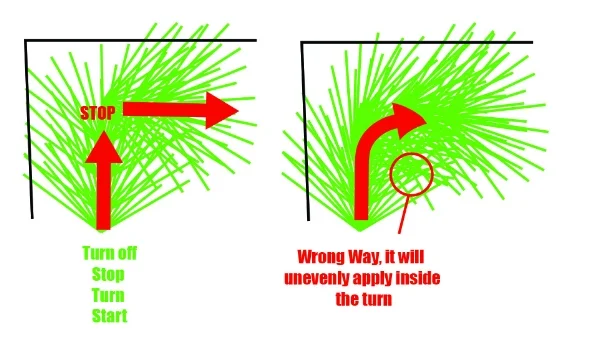
You should get into the habit of turning off your spreader, turning your body, then turning the spreader back on, and continue to fertilize. You should do this every time you come to a turn that is 135 degrees or sharper. This will help your application to be more uniform and even.

Another bad technique people have is, not moving at a steady pace and/or not applying at an even rate.
Either one of these can make your lawn look like something from a Dr. Seuss book. So keep your stride consistent and if you have a crank spreader try your best to rotate the crank at a consistent speed.
One last bad technique I will tell you to watch out for is the tendency not to overlap while applying. You should be spreading your fertilizer back to your footsteps from the previous pass. Spreaders put less fertilizer down the further it is from the spreader. Overlapping creates an even application. If you fail to do this, you will have stripes where you've applied light or no fertilizer. If you haven't gotten it by now, good fertilizing technique is all about applying evenly. So, just keep that in mind and you'll do great!
#3 Getting the not just good, but the best fertilizer!

Before applying or purchasing fertilizer, you should understand what you are applying or have a local expert help you to purchase what is right for your situation. Different grass types, soil structure, weather patterns, can all play a role in what kind of fertilizer you should apply, when to apply it, and how much to apply.
Using the wrong fertilizer can cause damage over time or create deficiencies in the lawn. There are a lot of people who have just "Okay" lawns in Salt Lake City, that could have amazing lawns if they just made a few adjustments in fertilizer. So, do your research, ask around, a little information can make all the difference.
I hope you now feel a little more confident in applying fertilizer to your lawn! Thanks, for taking the time to read this post!
-Cody Chamberlain, Owner of GR8 Landscaping